By Nqobile Dludla
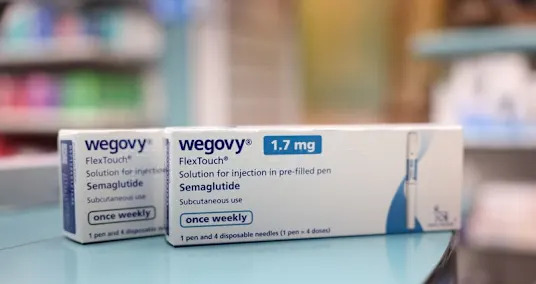
JOHANNESBURG, March 25 (Reuters) - Novo Nordisk is cutting South African prices of its weight-loss drug Wegovy for a second time since it launched in August, local executives said on Wednesday, pointing to fierce competition in a market led by rival Eli Lilly.
The Danish drugmaker launched Wegovy in South Africa in August, when reference pricing was uncertain due to talks with the U.S. administration on its proposed "most-favoured nation" policy linking U.S. drug prices to those in peer countries.
"We were of the view that the prices at the time were not conducive for the South African market," Thabeng Leping, who oversees market access and public affairs for Novo Nordisk South Africa, told Reuters on the sidelines of an event about obesity.
"Because we couldn't delay the launch, we just decided we'll fix it as we go along," he said. "So we reduced our prices in December. We've submitted another reduction of our prices yesterday."
The lowest injected dose of Wegovy has dropped from 3,090 rand ($183) to 1,873 rand, while the highest dose has fallen 27% to 3,746 rand. A further 12% cut to the 1.7 mg dose - the second highest - is awaiting approval, Leping said.
Eli Lilly's rival Mounjaro starts at about 3,600 rand. Its share of the South African market grew to 52% at the end of January, Aspen Pharmacare, the official seller of Mounjaro, said this month, predicting more than 1.3 billion rand ($77 million) in sales in the year through June.
Novo declined to give local sales figures, saying only that its products were doing "extremely well".
Speaking on a panel at the event, Novo South Africa General Manager Sara Norcross said the company intends to introduce its Wegovy pill locally "as soon as possible".
Both Novo and Lilly face competition from unauthorised copycat versions of their drugs, which Norcross said were used by one in two people on weight-loss treatments in South Africa despite adverse outcomes.
Novo has pursued legal action against a local compounder, while the health regulator is moving to classify such products as "undesirable."
($1 = 16.9093 rand)
(Reporting by Nqobile Dludla; editing by Philippa Fletcher)
LATEST POSTS
- 1
 Figure out How to Stay away from Normal Handshaking Missteps
- 27 Countries Where Newcomers Feel Most Welcome, and 3 Where They Often Don’t
- 3Like 'accelerating from stationary to supersonic flight': Europe's Hera probe boosts speed, stays on course for November asteroid rendezvous
- 4Russian authorities threaten WhatsApp with total ban
- 5Etymological Investigation Disclosed: A Survey of \Dominating New Tongues\ Language Learning Application





- Material of Innovativeness: A Survey of \Releasing Your Imaginative Potential\ Online Workmanship Course
- In the stomach of a mummified wolf pup, scientists find DNA from a woolly rhinoceros
- Volkswagen Just Revealed a Massive Range-Extended SUV for China, and America Isn’t Getting It
- Hypothermia claims newborn in Gaza and more babies are at risk, doctor says
- National health ranking puts Georgia near bottom of list. Here's why
- Bennu asteroid samples provide clues about solar system origins and 'space gum'
- Blue Origin safely launches wheelchair user to space and back
- Nigeria warns its citizens in South Africa to be cautious after march turns violent
- The Specialty of Compromise: Examples from Reality