As Iranian regime forces opened fired on citizens celebrating the dictator's death, London-based artist Naz used music on social media to make the voices of a jubilant, yet battered, nation heard.
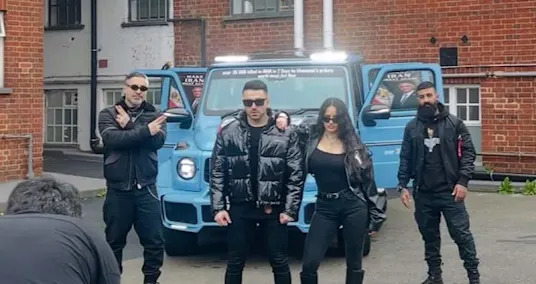
Just days after the killing of Iran’s supreme leader, Ayatollah Ali Khamenei, Naz - a London-based artist and TikToker of Iranian descent - appeared in a music video celebrating the dictator’s death. The song quickly became an early cultural response to what was widely seen as a pivotal moment in Iran and the broader region, drawing hundreds of thousands of views on Instagram within its first 24 hours.
The track, produced for social media by Hamed Fard, is titled "Hey Arr Arr" - the sound of a donkey’s bray - and uses mockery to parody the chant Heydar Heydar. In Shi'ite tradition, “Heydar” is a name for Imam Ali, meaning “lion,” and the chant serves as an invocation of his strength, courage, and authority. In the Islamic Republic, it has also taken on a political and paramilitary edge, used by regime loyalists and security forces as a morale-boosting cry during crackdowns and confrontations, including against unarmed protesters. Fard, a supporter of Crown PrinceReza Pahlavi, drew wide attention with the song. Some feminists, though, criticized parts of it, arguing that beyond its propagandistic tone, it also carried gendered undertones and elements of embedded patriarchy.
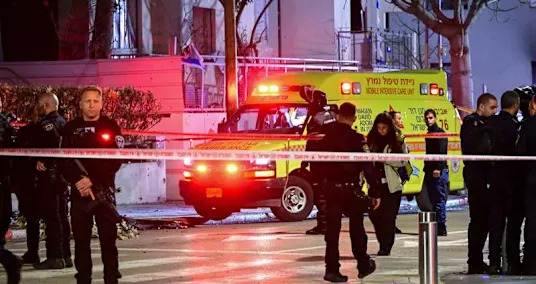
Naz - who is also a singer and dancer - told The Media Line that her appearance in the video aimed to amplify the voices of Iranians rejoicing over the dictator’s demise. When news of Khamenei’s death broke, citizens immediately flooded the streets to dance. The jubilation was met with brutal force in Tehran and several other cities as Basij and Islamic Revolutionary Guard Corps troops opened fire on the crowds, resulting in multiple deaths, injuries, and arrests.
Born in London and part of the second generation of the Iranian diaspora, Naz said she has traveled to Iran multiple times and considers it one of the best destinations for holidays. She identifies as a supporter of Pahlavi, emphasizing that he is not necessarily destined to become a monarch and that the Iranian people will determine the country’s future system of governance through a referendum after the fall of the Islamic Republic.
Critics of monarchy argue that second- and third-generation Iranians abroad have a limited understanding of the country and are often unfamiliar with the shortcomings of the prerevolutionary monarchical system, instead holding a nostalgic view of what they see as a glorious past.

Naz maintains that the Iranian people themselves will ultimately decide their future, though she believes a significant portion of the diaspora supports Pahlavi. Some opponents of the Islamic Republic remain skeptical about Pahlavi’s intentions - particularly those of his inner circle - and fear the establishment of another dictatorship, albeit with a modern façade, under his leadership.
Having grown up in London, widely regarded as a political hub for the Iranian diaspora, Naz is part of a community shaped by multiple waves of exile, from the period following the 1953 coup against nationalist Prime Minister Mohammad Mosaddegh to the final years of the rule of the last shah of Iran, Mohammad Reza Pahlavi, and the migration that followed the establishment of the Islamic Republic. London is also home to several major Persian-language media outlets, including BBC Persian, Iran International, and Manoto, which has largely halted its television broadcasts because of financial constraints, as well as a number of digital platforms.
'Woman, Life, Freedom' uprising first instance of London Iranian demonstrations
London first witnessed large-scale Iranian demonstrations during the “Woman, Life, Freedom” uprising in the fall of 2022, when some opposition figures attempted to form a unified leadership coalition. After Pahlavi withdrew from the multi-member alliance, divisions among opposition groups in London and across the diaspora gradually deepened.
In recent years, the Iranian population in London has grown substantially, driven in part by increased migration following the crackdown on the “Woman, Life, Freedom” protests. Since the January 2026 uprising, the community has again mobilized, staging demonstrations involving tens of thousands of participants, with monarchist supporters playing a prominent role. Those developments have also drawn greater engagement from second- and third-generation Iranians, who are increasingly attentive to political developments in Iran and more active in protests against the Islamic Republic.
According to Naz, artists of Iranian origin play an important role in raising awareness within London’s multicultural and pluralistic society, helping draw attention to developments in Iran and inform public opinion about conditions in the country. Like millions of Iranians in the diaspora, she hopes to see Iran free again after decades of oppression.
LATEST POSTS
- 1
 Auschwitz Committee wants German auction of Holocaust items scrapped
 - 2Building a Maintainable Closet: Individual Excursions in Moral Style
- 3UK consumer confidence plunges amid escalating Iran conflict
- 4Instructions to Expand Your Smash 1500's Presentation: Tips and Deceives
- 5Cuba fights to contain spread of mosquito-borne chikungunya virus




- Japan deploys the military to counter a surge in bear attacks
- One killed, several injured in Iran missile barrage on southern, central Israel
- How C-reactive protein outpaced ‘bad’ cholesterol as leading heart disease risk marker
- Vote in favor of the juice that you love for its medical advantages!
- Decrease in Home Buy Credits and Home loan Renegotiating Rates: An Outline of Latest things
- Famous Rough terrain Vehicles for 2024
- Climate engineering would alter the oceans, reshaping marine life – our new study examines each method’s risks
- Historic underwater structure discovered by divers off French coast
- Support Your Investment funds with These Individual accounting Thoughts