-
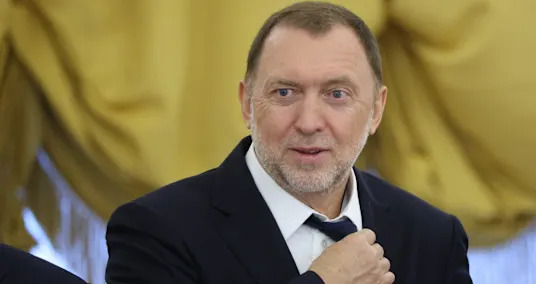
Russian tycoon Oleg Deripaska is calling for 12-hour, six-day workweeks.
-
The aluminum billionaire says longer work could help Russia speed through economic upheaval.
-
He says Russia's edge is its ability to rally and work harder in a crisis.
Russians should consider working 12-hour days, six days a week, as the country grapples with a deeper economic shift, Russian billionaire Oleg Deripaska said on Monday.
Referring to what he described as a changed global reality, Deripaska framed the country's slowing economy as more than a typical downturn driven by interest rates or monetary policy.
"This crisis is deeper. It is caused by a difficult transformation: from the global opportunities we once had to regional ones, with all sorts of restrictions," Deripaska wrote in a Telegram post.
He argued that Russia should tap into what he described as its only real resource — a "national characteristic."
"In difficult moments, we know how to pull ourselves together and work more," wrote Deripaska, the founder of Rusal, a major aluminum producer.
Longer working hours, he suggested, could help the economy adjust more quickly to changing global conditions.
"The sooner we switch to this new schedule — from 8 a.m. to 8 p.m., including Saturdays — the faster we will complete this transformation," the industrial magnate wrote.
His comments come as Russia's economy navigates a shifting landscape shaped by geopolitical tensions and changing trade flows.
Russia, a major energy exporter, has been benefiting from a surge in prices, with crude markets jolted by escalating tensions in the Middle East and disruptions to key supply routes.
Oil and gas revenues have historically accounted for more than a third of Russia's federal budget, which has been under pressure from sweeping sanctions in recent years. Official estimates showed Russia's economy grew 1% in 2025 — down sharply from 4.3% growth in 2024.
Disruptions to tanker traffic through the Strait of Hormuz — a critical global oil chokepoint — alongside a limited US sanctions waiver on some Russian shipments, have reshaped trade flows as countries scramble for supplies.
However, Deripaska had warned earlier this month that the conflict in the Middle East could weigh on global — and Russian — growth despite higher oil prices.
Benchmark crude oil futures are over 70% higher this year and trading above $100 per barrel.
Read the original article on Business Insider
LATEST POSTS
- 1
 'Every day I planned an escape': Ariel Cunio shares details of Hamas captivity
 - 2Language Learning Applications for Voyagers
- 3Partake in the Outside: Senior-Accommodating Exercises for 2024
- 4U.S. overhauls childhood vaccine schedule, recommends fewer shots
- 5'Malcolm in the Middle' reboot releases 1st trailer, reuniting Frankie Muniz and Bryan Cranston: Watch here


- The year's first meteor shower and supermoon clash in January skies
- Israel says 40 Hezbollah members killed as forces advance in Lebanon
- Governments take targeted action as fuel prices hit retail
- Interpreter Starts Sobbing as 11-Year-Old Testifies About Last Time He Saw His Mom Before She Was Killed in Missile Strike
- Flourishing as a Charitable Pioneer: Individual Encounters in Generosity
- Can ICE agents detain U.S. citizens? What powers do they have to arrest people? Your most common questions answered.
- Tech giants accused of not complying with Australian social media ban
- Guaranteeing Quality Medical care with Federal medical care Benefit Plans.
- Wisconsin archaeologists identify 16 ancient canoes in a prehistoric lake 'parking lot'