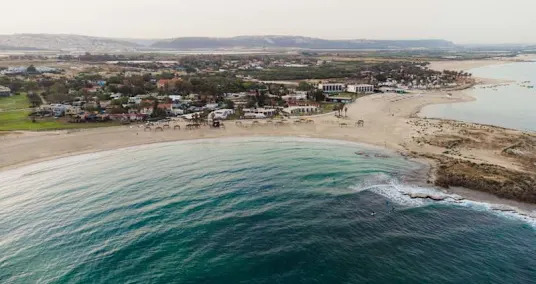
The discovery was made in an ancient shipwreck in the Dor Lagoon near the Carmel Coast, where archaeologists recovered nine pieces of unprocessed iron known as “blooms.”
Researchers from the University of Haifa said Wednesday that an underwater excavation off Israel’s northern Mediterranean coast uncovered what they described as the earliest known cargo of raw iron transported by ship, dating back around 2,600 years, Xinhua reported.
The discovery was made in an ancient shipwreck in the Dor Lagoon near the Carmel Coast, where archaeologists recovered nine pieces of unprocessed iron known as “blooms.” According to the university, the find provides direct evidence of how iron was transported in its earliest commercial stages.
The material was preserved in its original form, having solidified directly in a smelting furnace without undergoing forging or further refinement. Researchers said this distinguishes the cargo from later iron artifacts that typically show signs of shaping or tool-making.
Unlike copper and bronze, which could be melted into liquid form in ancient production processes, iron was heated with charcoal to produce a solid, porous mass. That mass was generally hammered to remove impurities and create denser material suitable for tools and implements.
The recovered blooms showed no indication of that secondary processing stage, suggesting they were transported immediately after production.

Earliest iron shipment discovered in ancient Mediterranean wreck
To determine the age and condition of the cargo, researchers conducted microscopic and chemical analyses.
Radiocarbon dating was also carried out on charred wood embedded in one of the pieces, helping confirm the timeline of the shipment. The findings were published in the journal Heritage Science.
Researchers said the cargo indicates that iron was being moved in raw form from production sites to other locations for further processing, pointing to a level of specialization in ancient manufacturing and trade networks in the Mediterranean.
The University of Haifa said the discovery provides new insight into early iron production and distribution practices in the region.
LATEST POSTS
- 1
 Russian strikes on Ukraine kill 5 people and wound 30 more
 - 2Nutrient Rich Organic products: Lift Your Wellbeing
- 3Iranian-backed militias escalate in Iraq, targeting Kurdistan Region president Nechirvan Barzani
- 4Activists: Venezuela released just nine prisoners despite promise
- 5Tourist trade in Greece and Cyprus suffering from Iran war effects




- What are parents to do as doctors clash with Trump administration over vaccines?
- Jamie Dimon warns Iran war could drive inflation, interest rates higher
- Qatar, Ireland accuse Israel of using chemical weapons on Palestinians, demand watchdog probe use
- Exploring the School Application Cycle: Understudy Bits of knowledge
- How did life begin on Earth? New experiments support 'RNA world' hypothesis
- He made a name for himself posting thirst traps on TikTok. Now he's the star of a wildly popular rom-com.
- Venice’s newest marvel is a wild, acrobatic dolphin. His refusal to leave puts him in danger
- 'Backward and upward and tilted': Spaceflight causes astronauts' brains to shift inside their skulls
- Yes, NASA's launching Artemis 2 astronauts to the moon on April Fools' Day. It's not a joke.